Morale doesn't come from pizza parties.
Low morale isn't about missing perks. It's about missing connection. When people don't know their teammates, work feels transactional. A daily 2-minute ritual changes that.
What low morale actually looks like
It's rarely dramatic. No one storms out. Instead, it's quieter than that:
- Meetings are efficient but lifeless. No one chats before or after.
- People do their work but never volunteer for anything extra.
- Slack channels are all business. No banter. No personality.
- New hires stay on the edge. Nobody pulls them in.
- People describe the team as "fine" but never "great."
What doesn't fix it
Throwing perks at the problem
Free snacks and ping pong tables don't make people feel connected to their teammates. Connection does.
Banking on a big team outing
The energy from a team dinner lasts about 48 hours. Then it's back to the same disconnected routine.
Writing off remote teams as lower-morale
Teams that interact daily have higher engagement than teams that sit in silence, even if they share an office. Proximity isn't connection.
Telling introverts to be more social
That pep talk doesn't work on quiet people. Give them a low-stakes way to participate instead.
What actually works: small, daily, shared moments
Research on team cohesion keeps landing on the same finding: teams bond through frequent, low-stakes interactions, not big events. The watercooler works because it's daily and accidental. The quarterly offsite doesn't stick because it's rare and scheduled.
Whether your team is remote, hybrid, or in the same building, busyness kills these moments. You need something that creates them deliberately, without making them feel forced.
A 2-minute daily ritual your team will actually do
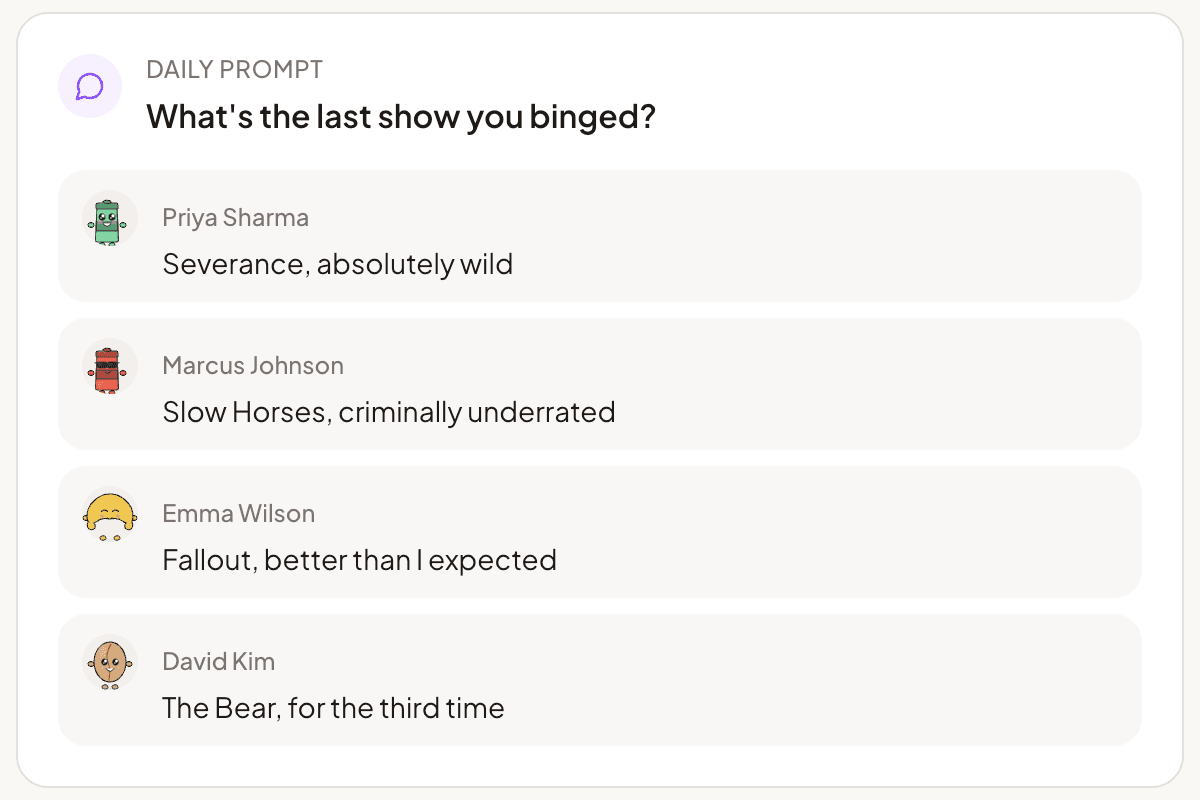
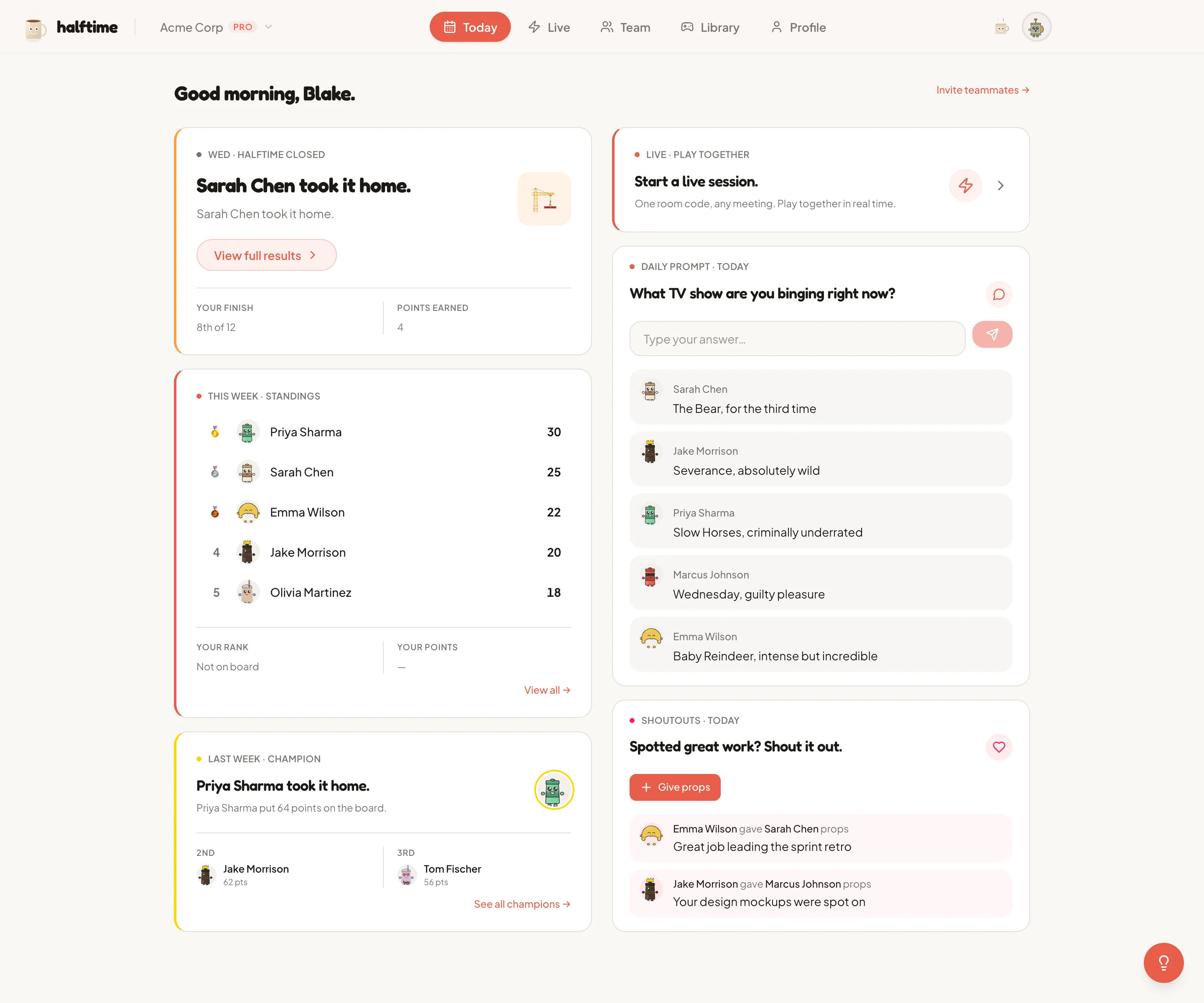
Halftime delivers a new game, prompt, or poll to your team every workday. People play when they have a spare moment. It takes 2 minutes. Then the conversation starts naturally.
Week 1
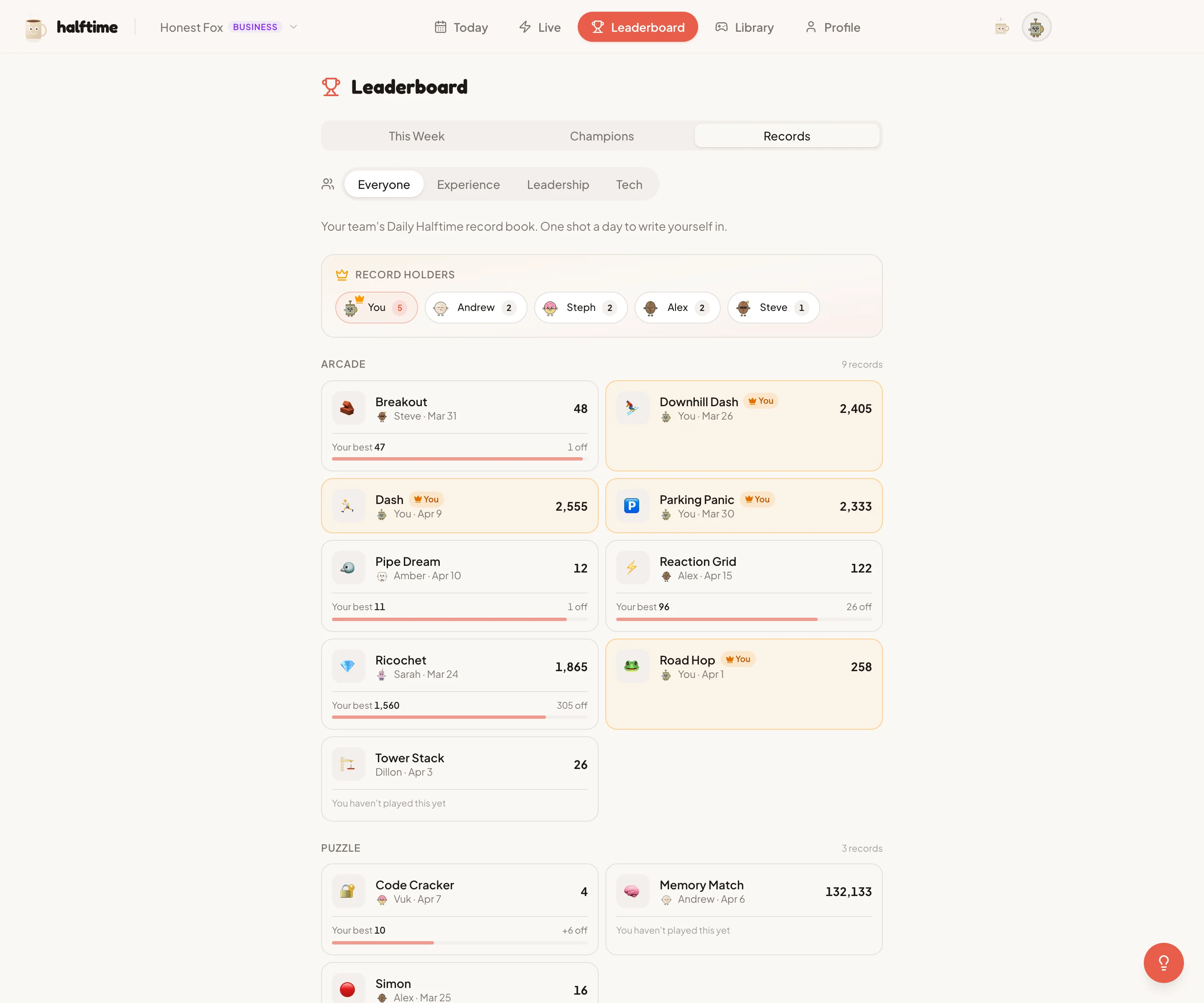
People start playing. Scores appear on the leaderboard. Someone posts "how did you beat me at Snake?" in Slack.
Week 2
People check results before their morning coffee. Friendly rivalries form. New hires get pulled into the conversation.
Month 1
Inside jokes develop. People know things about each other that have nothing to do with work. The team feels different.
Month 3
The team describes itself as close-knit. Collaboration improves because people actually trust each other. Morale isn't a topic anymore, it just is.